
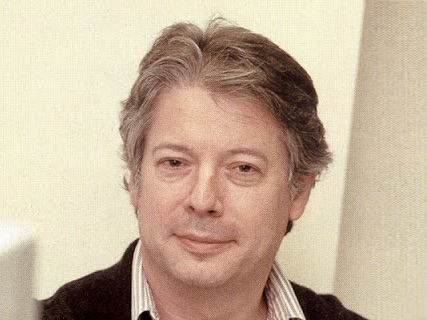
Daniel Recasens (UAB) — ‘From experimental phonetics to sound change: vocalization and deletion of syllable-final dark /l/ in Middle English and Early Romance’
Seminari del CLT
Divendres, 12 de desembre de 2025
Horari: 15:30h
Aula 202
Enllaç Teams
Abstract:
This research project investigates the phonetic causes of the vocalization and deletion of syllable-final dark /l/ in /VlC/ sequences (where V stands for ‘vowel’ and C stands for ‘consonant’) in Middle English and Early Romance. In particular, it deals with an unexpected sound change process which took place in Western Romance in the Middle Ages, i.e., /l/ vocalized into [w] after low and back rounded vowels and before coronals, i.e., dentals, alveolars and palatoalveolars, but not before labials and velars (e.g., Piedmontese [awt] Italian alto, [ˈmalva] It. malva, [sulk] It. solco). In contrast with previous explanations, I hypothesize that the primary reason for this sound change is to be sought neither in the enhancement of the /l/ darkening degree before coronals nor in the develarization of the lateral consonant before labials and velars but in the relative prominence of the F2 (second formant) transitions connecting /l/ to the following consonant. Departing from the intermediate stage [Vʊ̭lC] of /VlC/ sequences emerged through glide insertion (which has been assumed to occur in Middle English), the glide was deleted when followed by labials and velars due to the flat and hardly perceptible /lC/ transitions in question. As to the /VlC/ sequences with coronals, the lateral was deleted through gestural merging with the following consonant after which [ʊ̭] stayed after a low vowel and often merged with the preceding back rounded vowel in accordance with differences in acoustic prominence of the F2 transitions connecting the vowel to the glide (Piedmontese [awt] It alto, [ˈvɔta] It. volta).
- 12 des., 2025
- Caducat!
- 15:30 - 17:00
- Campus UAB, Bellaterra (Barcelona)
Organitzador

-
Centre de Lingüística Teòrica
-
Telèfon
(+34) 93 581 23 72 -
Correu electrònic
cr.clt@uab.cat -
Web
https://clt.uab.cat/